
TRAINING QUESTIONS
Straight answers to the most common training questions from real dog owners.
VIEW FAQs
Real questions. Clear answers.
Training, programs, and what to expect.

Straight answers to the most common training questions from real dog owners.
VIEW FAQs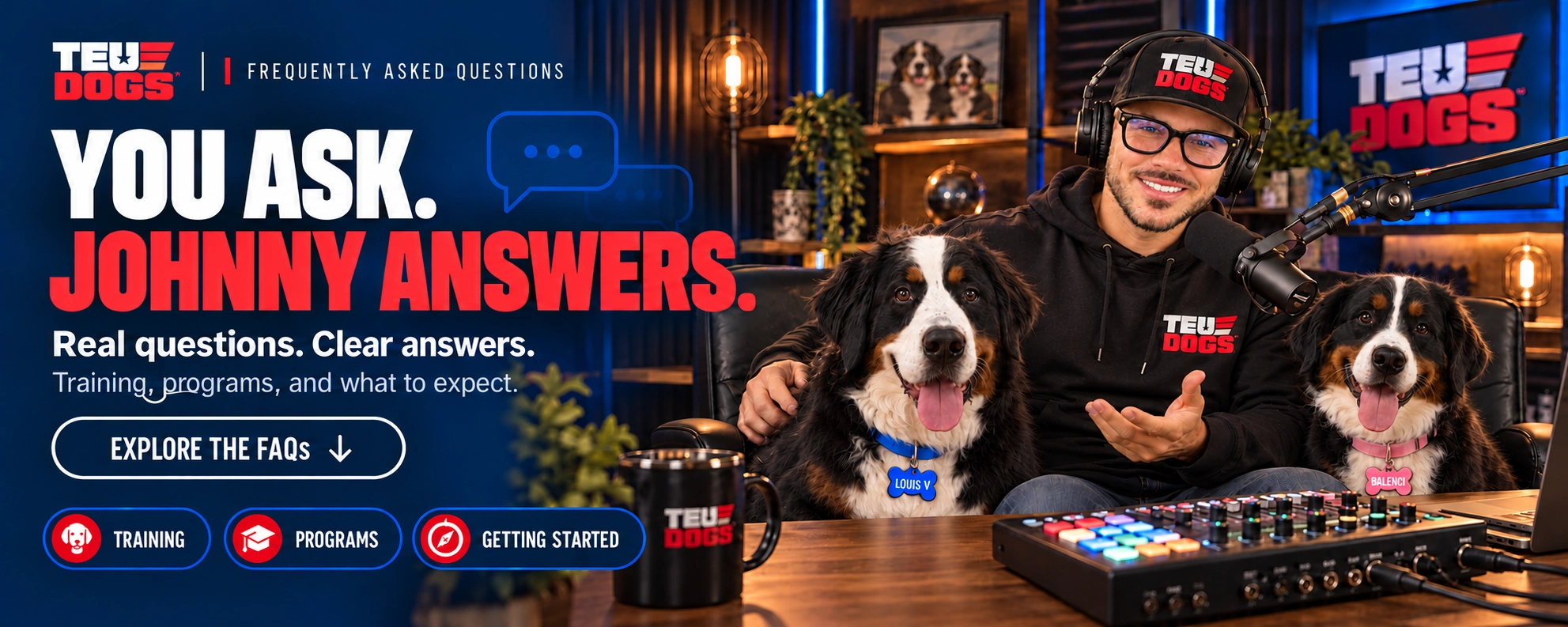
Real guidance for your dog. Choose a question to read the answer.
TEU Dogs is the abbreviated version of Train Em Up Dog Training.
Start with an evaluation. We discuss your goals, learn about your dog, and customize a training plan around your household and everyday life.
TEU offers a free 20-minute FaceTime evaluation or a one-hour in-home evaluation for $100. We discuss your goals and assess your dog’s behavior, your routines, and how you work together to recommend the right training journey for you both.
No. There are no quick fixes—progress takes work and commitment from the trainer, the dog parent, and the dog. After the evaluation, TEU customizes ten sessions, twice weekly for five weeks, followed by a reassessment.
Lasting change takes repetition and consistency. Ten sessions give us time to teach your dog, coach you, build better routines, and adjust the plan as you progress.
Training starts on day one—with trust, bonding, clear boundaries, and consistent daily routines. TEU can help right away with house-training, puppy manners, and guidance to raise a loving, trusting, obedient adult dog. More advanced TEU training can begin at 4–6 months, depending on your puppy’s readiness.
No—older dogs can learn. TEU believes in giving every dog a chance, adapting the pace and goals to their needs. Some dogs require more time, effort, and consistency.
Yes. We work with dogs of all breeds, sizes, and temperaments. We get to know the individual dog and tailor the approach to their needs and your goals.
Johnny, TEU’s head trainer, brings over 20 years of experience working with dogs of all sizes—from small to extra-large. He has helped families move from frustration toward happier dogs, happier dog parents, and happier homes.
Johnny practices what he teaches with his own dogs every day. Alongside their service-dog roles, his dogs help children and older adults in the community.
TEU follows a balanced training philosophy. We draw from different methods and customize the approach to your dog’s temperament, motivation, needs, and goals. Clear communication and trust come first.
Depending on the dog and the plan, we may use training leads, treats, food rewards, markers, prong collars, or e-collars. We explain each tool’s purpose and teach you how to use it appropriately. Not every tool belongs in every plan.
Commitment. The trainer, dog parent, and dog work together to build a relationship grounded in trust, clear guidance, and consistent practice. Training is a journey, not a quick fix.
Absolutely. We educate the dog parent alongside the dog, helping you develop the timing, communication, and consistency needed to continue the work between sessions.
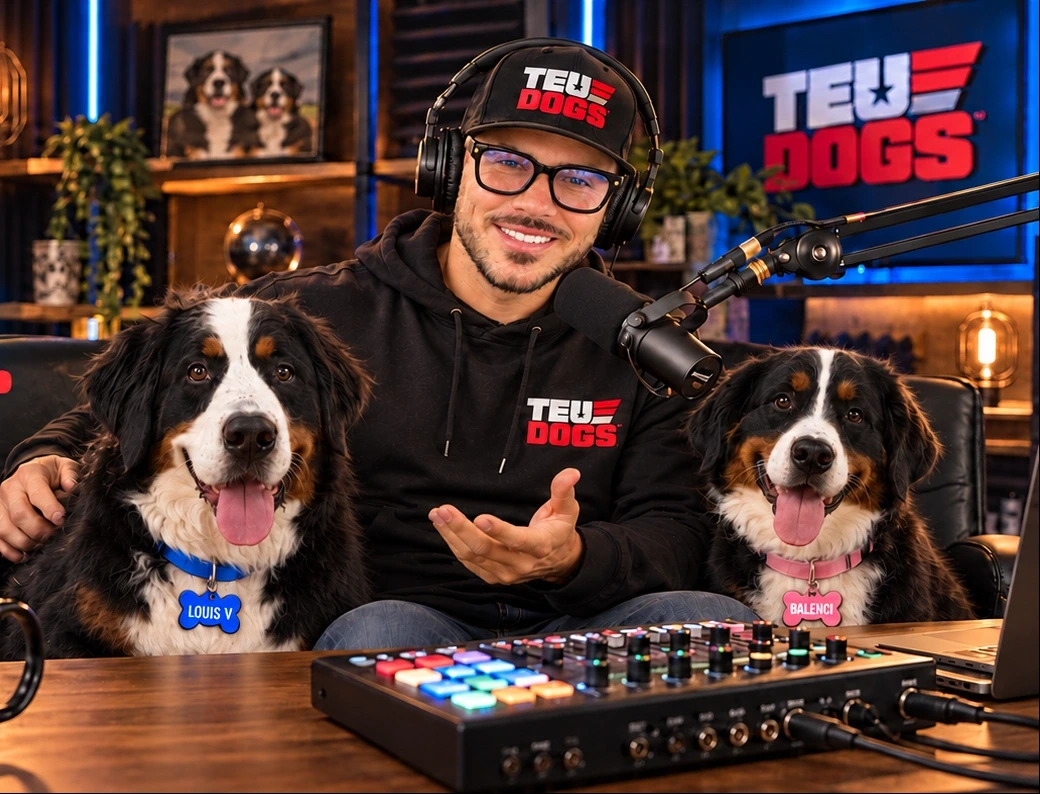
Yes! Johnny’s Bernese Mountain Dogs, Louis V and Balenciaga, are featured throughout the site. Both are his personal service dogs. They train daily and help children and older adults in the community.
Yes. We look at what drives the behavior, teach useful alternatives, and help you practice clear, consistent responses in everyday situations.
TEU works with challenging behavior through an individual assessment and behavior-modification plan. We focus on understanding triggers, managing situations, and building more appropriate responses. Progress varies by dog.
Yes. TEU specializes in behavior modification, including fear, reactivity, and separation anxiety. We customize the approach to your dog’s needs and guide you through the work.
Yes. We work with you and your puppy to build consistent routines and guide you through house-training and everyday puppy manners.
Yes. Real-world training helps your dog carry learned skills into everyday settings. We introduce distractions gradually and practice where it makes sense for your dog’s progress.
We start with where your dog is today. We discuss previous training, what helped, and what still needs work, then customize the next steps.
Yes. TEU comes to your home so we can work with you and your dog where daily routines and behaviors happen.
Yes. Our primary service area is Nassau and Suffolk County, and we consider other parts of New York. We discuss distance, travel time, and scheduling to create an arrangement that works for everyone.
Every dog and goal is different. Progress depends on the behavior, the dog’s needs, and your consistency between sessions. We track improvement and adjust the plan rather than promise a fixed timeline.
Every moment together is a learning opportunity—walks, meals, and everyday life. In addition, practice the skills covered in your sessions for 15–20 minutes, two to three times a day, at different times.
Everyone does not have to attend, but TEU encourages as much family participation as possible. The main handler must be present at every session, and everyone should follow consistent cues and routines.
We work toward dependable skills and gradually reduce prompts as your dog’s understanding grows. The pace and ongoing support needed depend on the individual dog and situation.
We guarantee our effort, preparation, education, and commitment—not a miracle fix. Results depend on the dog’s needs and a consistent partnership between TEU, the dog, and the dog parent.
We reassess your dog’s progress, review your goals, and discuss what comes next. That may include continued practice, additional sessions, or work on new skills.
Yes. Every package includes ten sessions and requires a 30% deposit, with the remaining balance split into payments over the five-week program. Payment amounts depend on your package, and TEU offers several payment methods.
Click LET’S GET STARTED, complete the intake form, and tell us about your dog and your goals. Johnny will contact you to discuss the next step.
BETTER DAYS. STRONGER BONDS.
Talk with Johnny and let’s build a stronger relationship with your dog.