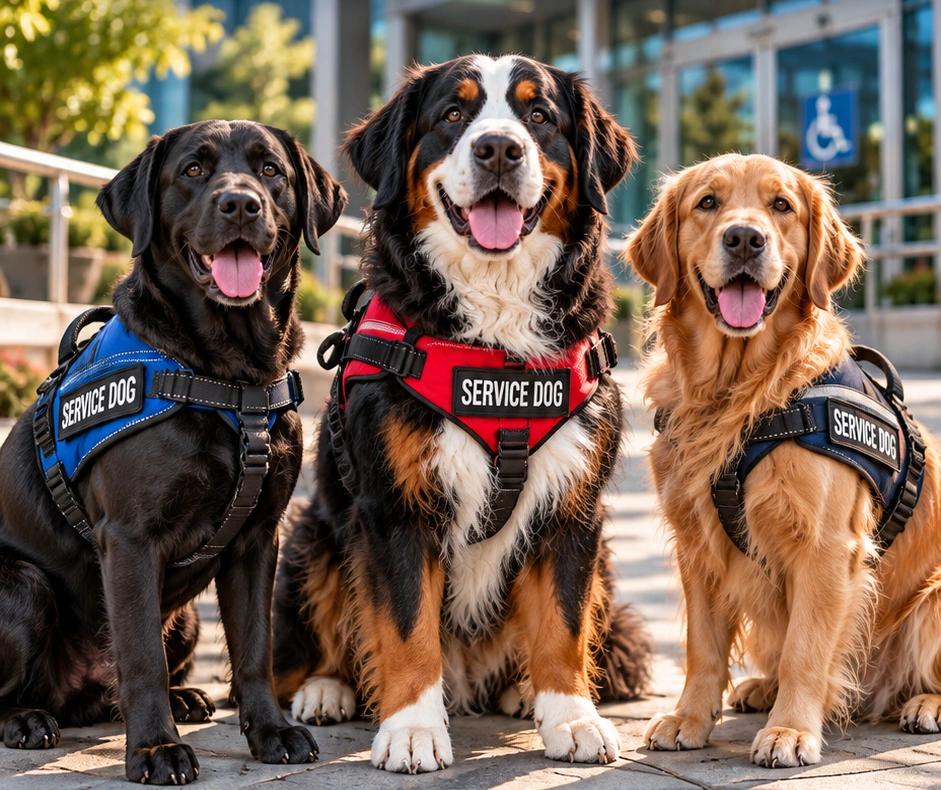
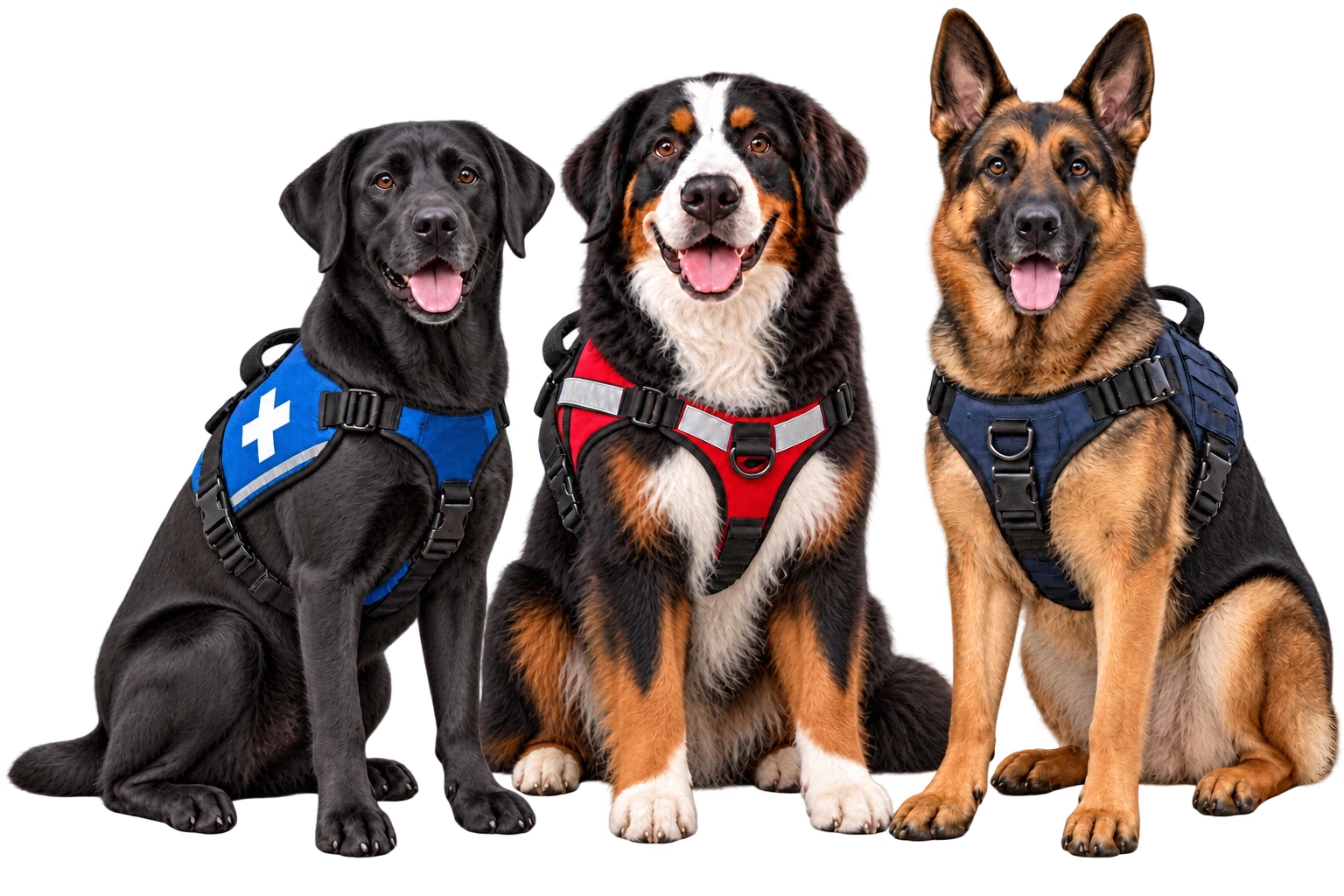
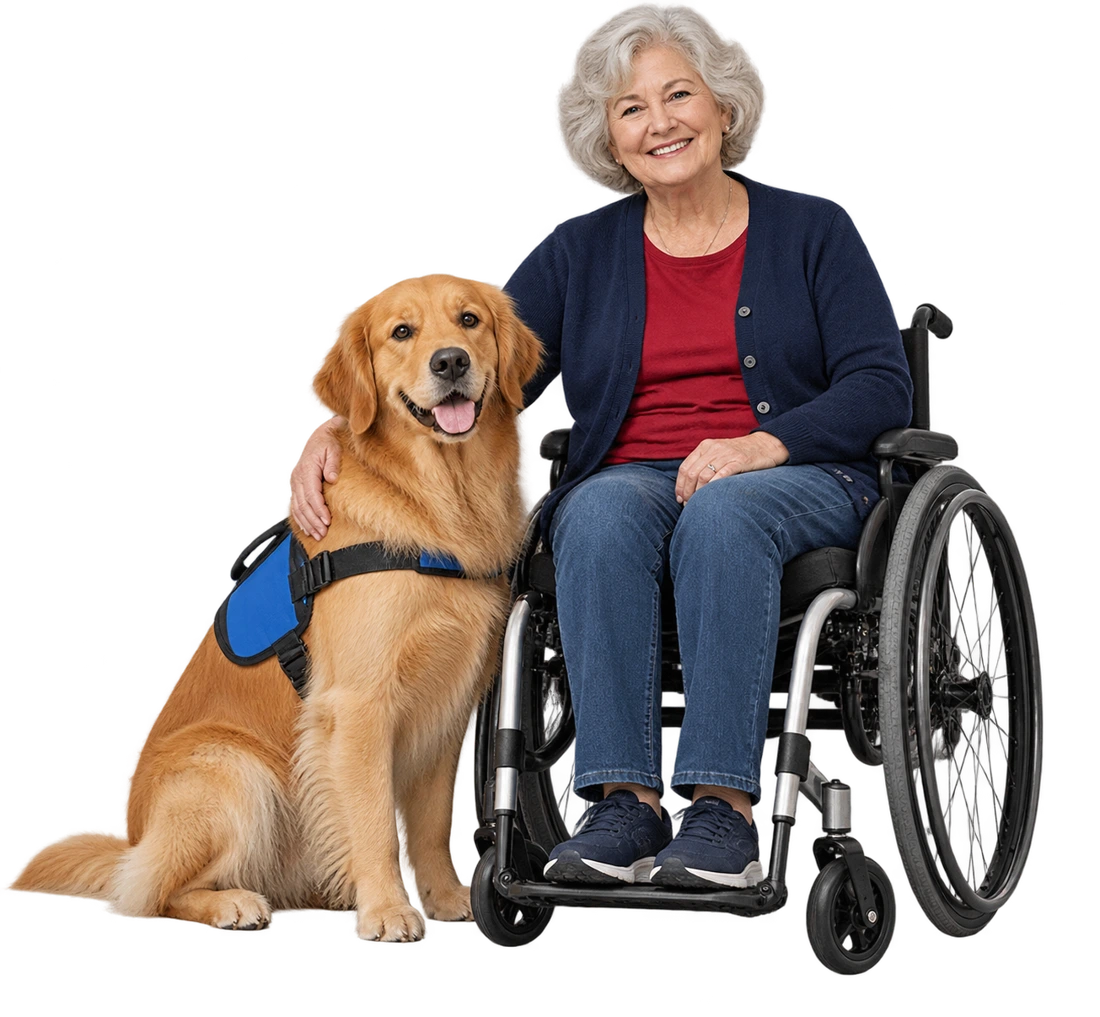
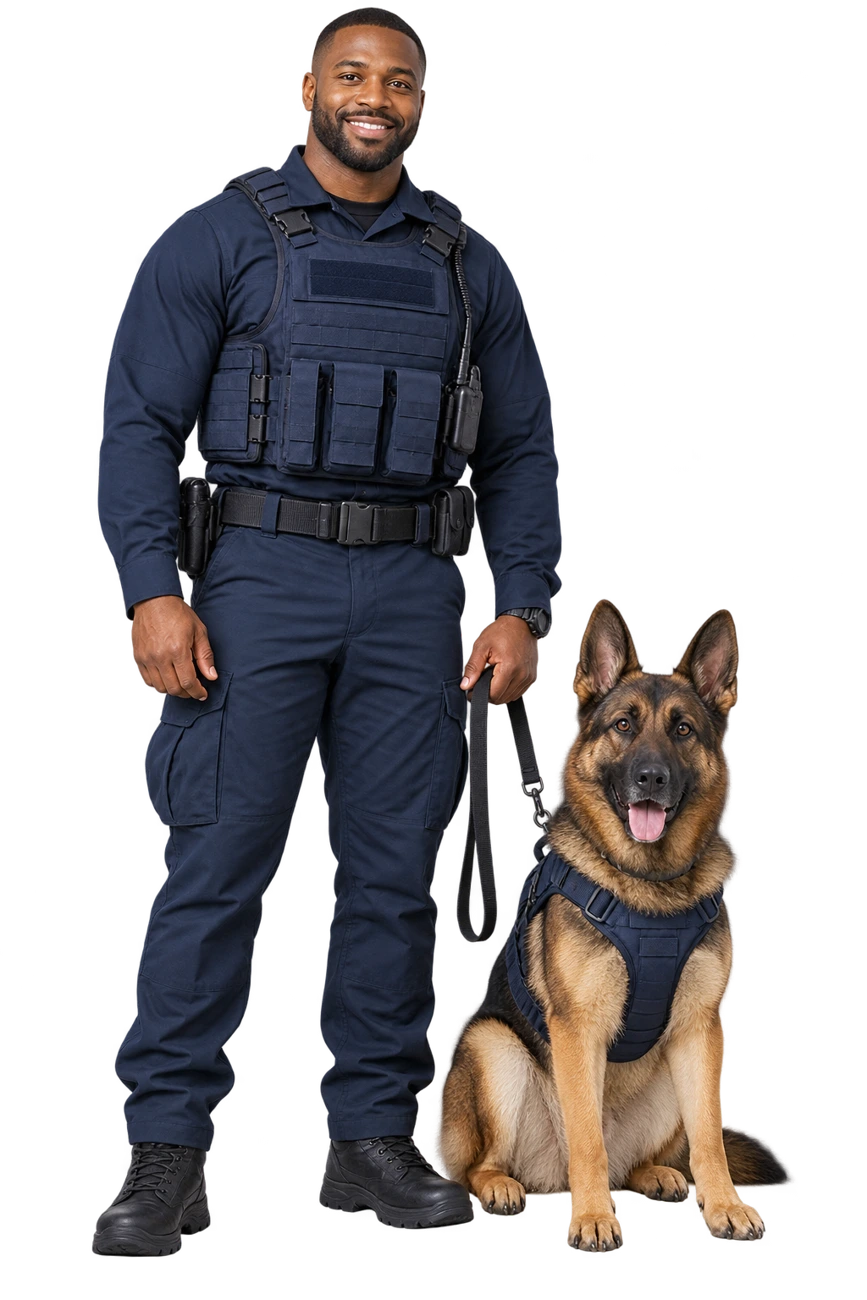
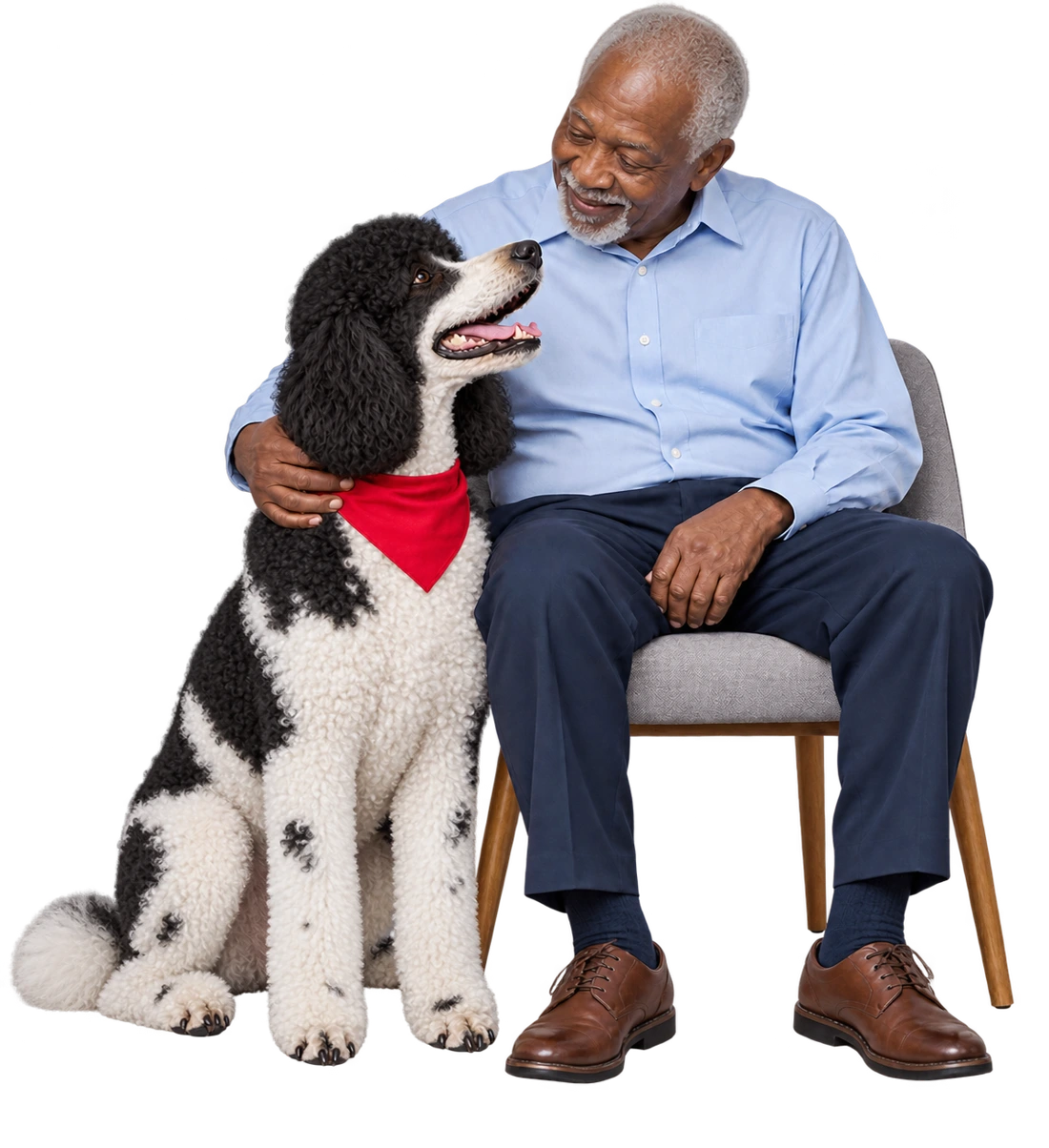
Service, emotional support, therapy, and public-safety dogs help in different ways. Their titles do not carry the same access rights.
01
SERVICE DOGS
Individually trained to perform disability-related tasks for their handler. This includes guide, hearing, mobility, medical-response, and psychiatric service work.
THE KEY: A TRAINED TASK.
ADA public access generally applies in covered public places, subject to the dog being housebroken and under control.
02
EMOTIONAL SUPPORT
Provide comfort through their presence. An emotional support dog does not need disability-task training to provide that comfort.
THE KEY: COMFORT & SUPPORT.
Emotional support alone does not create ADA public-access rights. Housing is a separate legal question; see the current housing guidance below.
03
THERAPY DOGS
Visit other people with their handler in approved settings such as hospitals, schools, and care facilities. Teams prepare for safe, appropriate interactions.
THE KEY: HELPING OTHERS.
A therapy-dog designation does not provide ADA public access. Visits require the facility’s permission and applicable program requirements.
04
POLICE, FIRE & RESCUE
Work with agencies and specialist handlers on detection, investigations, or finding people. A rescue working dog searches for people; it is a job, not a description of an adopted dog.
THE KEY: A SPECIALIST MISSION.
These operational roles do not automatically make a dog an ADA service animal.
A psychiatric service dog performs a trained action related to a psychiatric disability. Comfort from a dog’s presence alone is emotional support. The disability can be invisible; the distinction is the trained work.
Guide and hearing tasks, retrieving needed items, and disability-related medical-response or psychiatric tasks can support daily participation. Tasks must suit the individual handler; a dog’s work complements their care plan.
SEARCH & RESCUE
Search teams locate live human scent or human remains. Disaster dogs train for rubble, noise, difficult surfaces, and distractions. Dog and handler work as a coordinated team.
POLICE & TRANSPORT SAFETY
Specialist teams detect explosives or evidence and support investigations. NYPD canine teams help protect major events and infrastructure. Training depends on the agency and assignment.
FIRE INVESTIGATION
Accelerant-detection dogs help investigators identify potential ignitable-liquid evidence at fire scenes. Their findings support an investigation; they do not replace laboratory analysis.
THERAPY & CONNECTION
Approved therapy visits offer connection in healthcare, education, and community settings. Handler education, the dog’s comfort, and appropriate interactions matter as much as enthusiasm.
WHY THE TRAINING MATTERS
The goal is useful, reliable behavior in the setting where it is needed. Clear cues, repeated practice, suitable temperament, teamwork, and care support the dog and the people relying on them.
These are reported program and network figures—not a combined census of every working dog. Dates, geography, and definitions differ; do not add the totals together.
28,308
ASSISTANCE-DOG TEAMS
Active teams reported by ADI member programs worldwide in 2024: 11,616 guide, 2,345 hearing, and 14,347 service teams. This excludes dogs outside that reporting network.
The 2025 TSA canine calendar reports more than 1,000 teams across over 100 airports, mass-transit, and maritime systems. This is TSA’s program, not all police K9s.
Pet Partners describes millions of visits in a typical year by thousands of teams. Its network includes dogs and other species; this is visits, not unique people or dogs.
Obedience is a foundation. Service work adds disability-related tasks and dependable behavior in the environments the handler uses. Police and rescue work follow specialist operational standards.
01
ASSESS THE MATCH
Consider the dog’s health, temperament, motivation, and comfort alongside the person’s needs. A working role must suit the individual dog.
02
BUILD THE FOUNDATION
Develop communication, leash skills, recall, settling, house-training, and appropriate responses to people and other dogs.
03
TEACH THE SPECIFIC WORK
Define the needed behavior and teach it clearly. For an ADA service dog, that work must relate directly to the handler’s disability.
04
PRACTICE & MAINTAIN
Prepare for relevant distractions gradually. Continue handler practice, skills review, rest, veterinary care, and attention to the dog’s welfare.
NO ONE-SIZE-FITS-ALL TIMELINE.
The ADA does not require professional training or a fixed number of training hours. People with disabilities may train their own service dog. Buying a certificate or vest does not create service-dog status.
TEU can discuss your dog’s foundations and training goals. Police, fire, and disaster-response readiness requires the relevant specialist program; a general training package is not an operational qualification.
When the dog’s role is not obvious, staff may ask whether it is required because of a disability and what work or task it is trained to perform. They cannot demand the diagnosis, a task demonstration, or certification.
CONTROL & CARE
The dog must be housebroken and under control. A leash or tether is normally required unless the disability or task prevents it; another effective means of control must then be used. The handler provides care.
NO VEST OR REGISTRY REQUIRED
The ADA does not require a vest, ID, or service-dog certificate. Any breed or size can qualify. Ordinary local dog licensing and vaccination requirements still apply.
ACCESS HAS LIMITS
Covered public places generally admit service dogs. A dog may be excluded for uncontrolled behavior that the handler does not correct, lack of house-training, an actual direct threat, or a fundamental alteration. Fear or allergies alone are not grounds for exclusion.
IN TRAINING IS DIFFERENT
A dog still in training does not have federal ADA public-access protection. State or local laws may offer different protection. Check the rules that apply to the setting.
RESPECT A WORKING TEAM
Ask the handler before interacting. Avoid calling, feeding, or distracting a working dog. Give the team space and follow the handler’s lead.
Housing accommodation is separate from ADA public access. HUD’s May 22, 2026 enforcement guidance focuses on animals trained for disability-related assistance and rescinds earlier ESA guidance. That policy does not eliminate private court claims; state or local protections may also apply. Verify the rules for your situation.
Air travel follows DOT rules, not the ADA public-access rules. Airlines may require DOT forms; emotional support animals need not be treated as service animals. Workplace accommodations use a separate employment process.
Educational information, reviewed October 10, 2026. This page explains roles and public guidance; individual legal and medical decisions need appropriate professional advice. Dog artwork illustrates roles and is not evidence of certification.
A STRONGER FOUNDATION STARTS HERE
REAL TRAINING. PURPOSEFUL PROGRESS.
Talk with Johnny about your dog, your goals, and the right next step.